
Ceremony Draping
Create a defined setting for the ceremony, soften the existing room, and give the couple a cleaner visual background from guest and camera viewpoints.
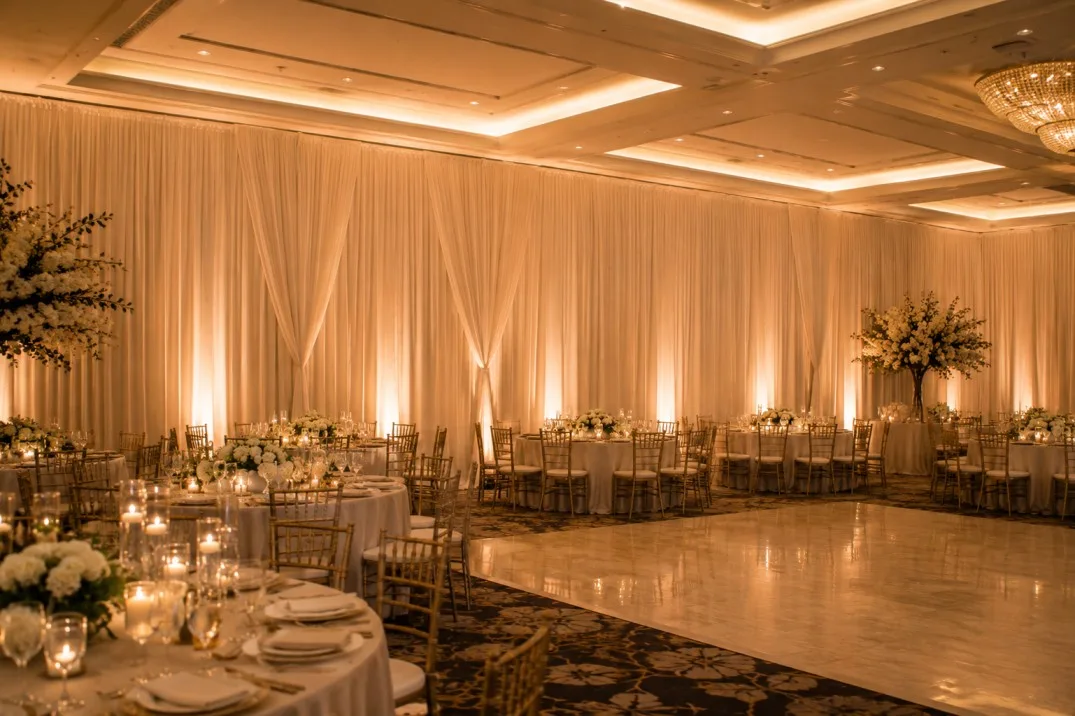
Wedding Draping Services
Use fabric to shape the ceremony, soften the reception, frame the sweetheart table, create cleaner backdrops, and make the venue feel more intentional without hiding everything that already works.
Designed Around The Wedding
Wedding venues come with existing architecture, wall finishes, doors, windows, lighting, carpeting, and room proportions that were selected long before the wedding was planned. Some of those details may work beautifully. Others may compete with the atmosphere you want to create.
Wedding draping gives you a temporary way to control more of that visual environment. Fabric can soften a ballroom, create a ceremony background, define the sweetheart table, frame a stage, conceal a distracting wall, or make one part of a large room feel more important.
That does not mean every wall needs to disappear. A stronger plan usually comes from identifying which areas guests will notice most and using draping where it has a clear purpose.
Wedding Applications
Current wedding draping providers commonly organize the service around ceremonies, reception walls, sweetheart tables, stage backdrops, and broader room treatments. The useful scope still depends on the venue and the wedding layout.
Create a defined setting for the ceremony, soften the existing room, and give the couple a cleaner visual background from guest and camera viewpoints.
Use fabric around selected walls or larger parts of the room to help the reception feel more cohesive without covering features that already work well.
Frame the sweetheart table with a focused fabric background that gives an important reception area a more finished visual setting.
Create a cleaner background behind speeches, entertainment, introductions, performances, and other formal reception programming.
Reduce visual distractions from existing walls, doors, service areas, or architectural surfaces that do not support the wedding design.
Create temporary separation inside a large venue when the wedding needs a more intimate layout, concealed work areas, or clearer event zones.
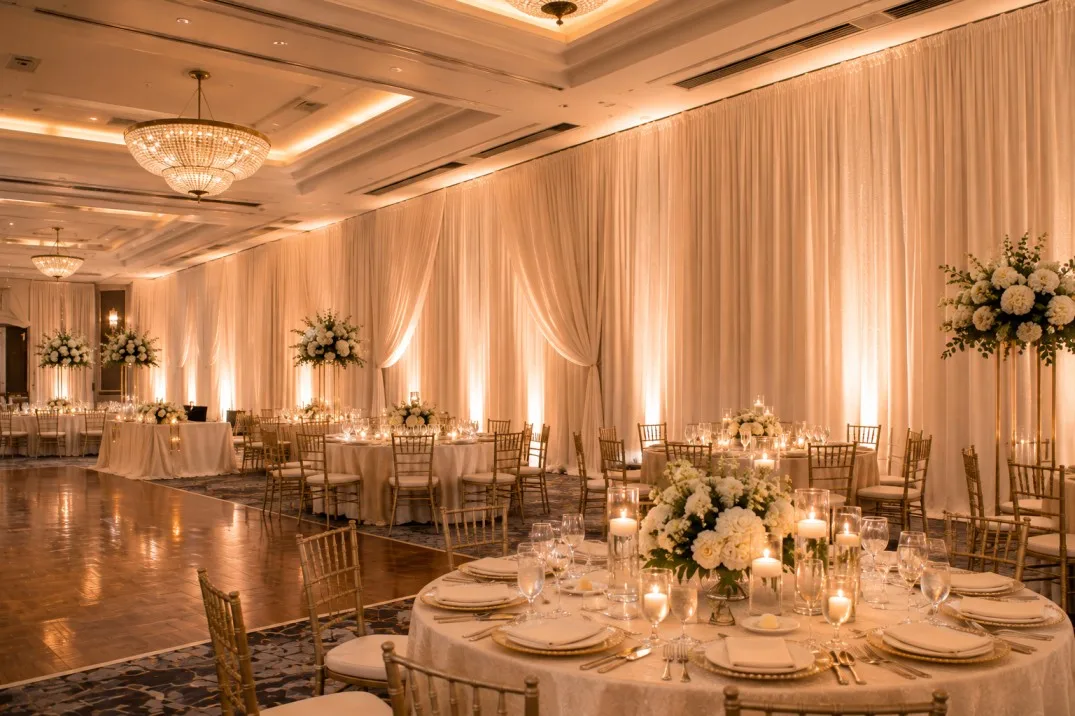
Ceremony Draping
The ceremony is one of the few parts of a wedding where most guests are looking in the same direction at the same time. That makes the background behind the couple especially important.
Doors, wall fixtures, service entrances, or other venue elements can become much more noticeable once every chair is facing them. Fabric can create a cleaner ceremony setting without requiring permanent changes to the venue.
The amount of draping should depend on the ceremony layout, room width, guest seating, photography angles, and what already exists around the focal point. In many rooms, a restrained installation feels stronger than covering every surface.
Planning The Room
The wedding timeline, floor plan, guest view, photography, entrances, and service paths all affect where fabric can make the most useful difference.
Architecture, room proportions, ceiling height, existing finishes, access points, and venue rules all influence the right draping plan.
Ceremony locations, sweetheart tables, stages, entrances, and photography areas usually deserve more attention than surfaces guests rarely notice.
Draping should make sense from where guests are seated, entering the room, watching the ceremony, dining, and moving through the reception.
Camera angles can reveal more of the room than one viewing position, so important wedding backgrounds should be considered from multiple directions.
Reception Draping
Reception draping can range from one carefully treated wall to broader coverage around a ballroom. The right scope depends on the venue and the parts of the room that appear most often in the guest experience.
A ballroom with attractive architecture may need only a sweetheart backdrop or stage treatment. Another venue may benefit from broader wall coverage where service doors, built-in fixtures, or distracting surfaces compete with the wedding design.
Guest tables, dance floors, entertainment, screens, catering access, stages, and entrances should all be considered before the draping layout is finalized. The room still has to function after it is transformed.
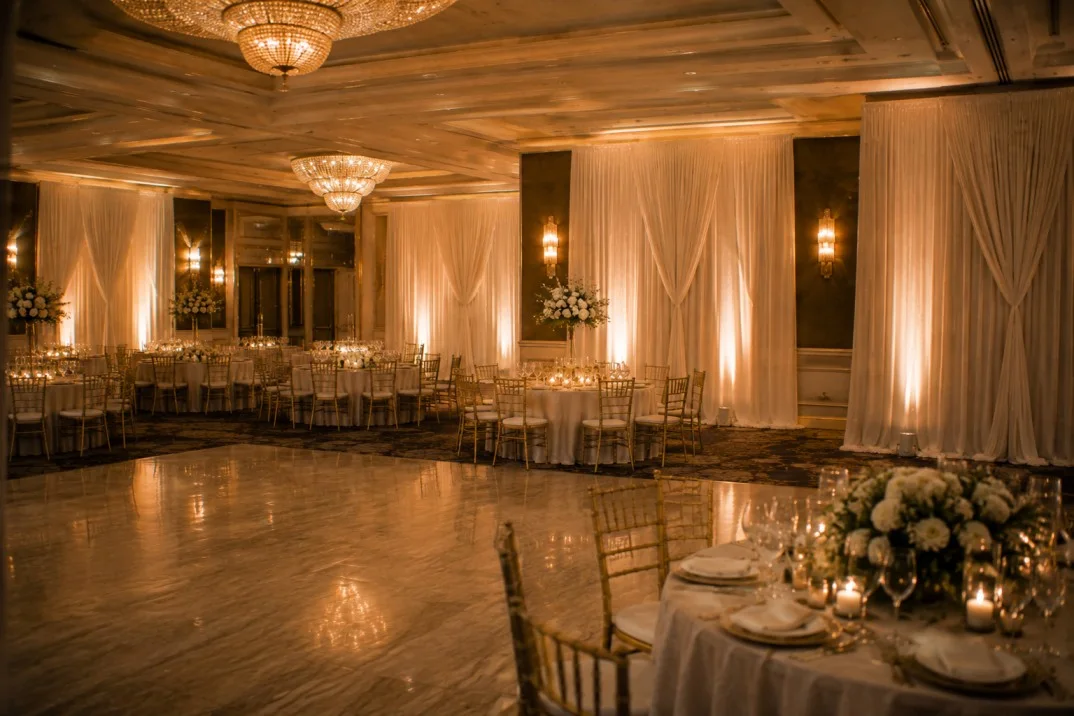
Important Wedding Moments
Think about where guests will look, where photographs will happen, and which areas will appear repeatedly throughout the wedding day.
The ceremony often needs one strong focal point that feels connected to the venue while separating the couple visually from the surrounding room.
Reception draping can soften larger venue surfaces and create a more consistent visual environment around dining, dancing, and formal programming.
A focused fabric background can help the sweetheart area feel intentional without requiring the entire ballroom to receive the same treatment.
Cleaner backgrounds around important moments help photography and video capture the wedding without distracting venue elements competing for attention.
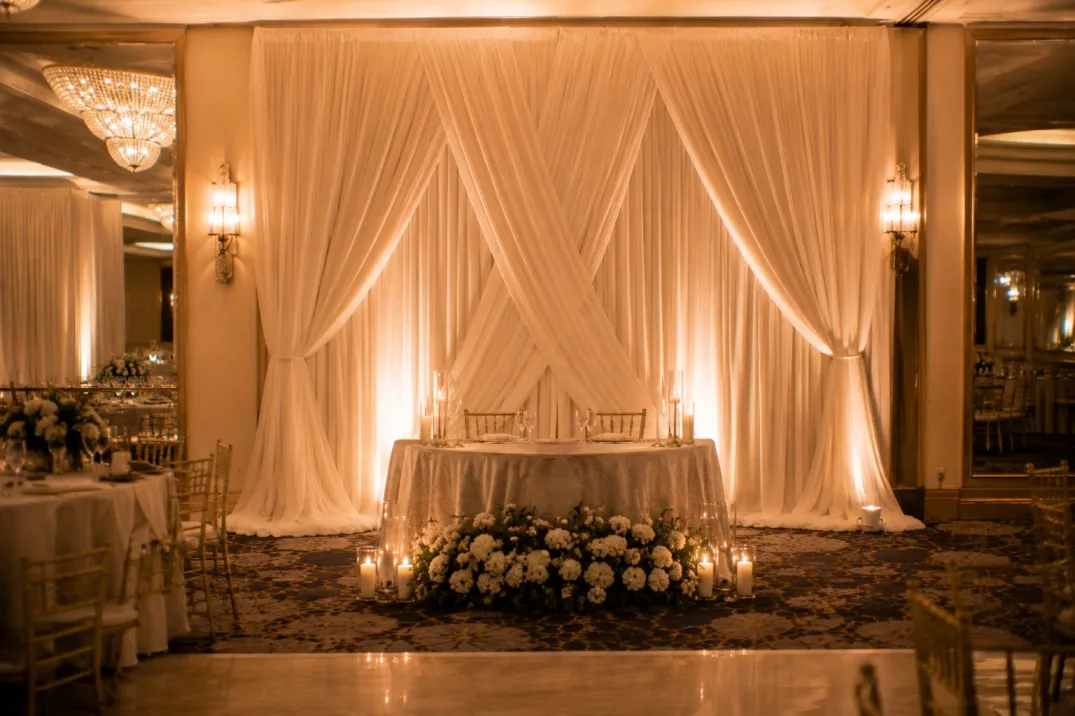
Sweetheart Table Draping
The sweetheart table often becomes a natural focal point during dinner, speeches, photographs, and other parts of the reception. A defined fabric background can separate that area visually from the rest of the ballroom.
The backdrop should be planned together with the table, seating, florals, lighting, and surrounding room. If the drape is too narrow, nearby venue elements may remain visible in photographs. If it is oversized, it can compete with everything around it.
Thinking about the full frame usually creates a stronger result than treating the fabric as a separate decorative piece.
Explore Backdrop RentalsHow Much Draping?
Treat one important area such as the ceremony, sweetheart table, stage, entrance, or photography background when the rest of the venue already works well.
Soften selected venue surfaces while preserving architecture that should stay visible. This can create a more consistent reception without covering everything.
Broader draping can change how a ballroom feels when multiple walls, divisions, focal points, or other areas need attention as one coordinated wedding environment.
Explore Room TransformationsPhotography & Video
The ceremony background, sweetheart table, stage, and reception walls may appear in hundreds of photographs and hours of video. That means the installation needs to work from more than one standing position.
A wider camera angle may reveal a doorway beside the backdrop. A photograph from the dance floor may show a wall that was not obvious from the sweetheart table. Group photographs may need more usable background width than photographs of the couple alone.
Considering those views before the wedding helps determine where broader coverage is useful and where a smaller focal installation is enough.
Consider what sits behind and beside the couple from the guest seating area.
Wider compositions can reveal venue surfaces outside the center of the backdrop.
Larger groups need enough usable background width to keep the visual frame consistent.
Think about views from guest tables, the dance floor, stage, and main entrances.
Wedding Event Support
Delivery, setup windows, venue access, breakdown, and the ceremony or reception schedule all influence how the draping project is coordinated.
Delivery is available for DMV Drape wedding draping projects.
Setup and breakdown are available so the temporary installation can be handled as part of the wedding service.
DMV Drape accepts inquiries around the clock for wedding draping needs and project planning.
Service Coverage
DMV Drape serves wedding draping projects throughout Virginia, Washington DC, Maryland, North Carolina, and South Carolina. Include the exact venue when requesting a quote so access, ceremony plans, reception layouts, and installation requirements can be considered together.
Explore Service AreasPlanning Your Wedding
You do not need exact measurements or a finished design before reaching out. Share what you already know and the planning can become more specific from there.
Start with the date so availability and the event timeline can be considered.
Share the venue name or city and whether the ceremony and reception are in the same space.
Explain whether you are considering ceremony, reception, sweetheart, stage, wall, or broader room coverage.
Room photographs, floor plans, venue images, and inspiration references are useful when available.
Wedding Draping Questions
The right amount of wedding draping depends on the venue, the ceremony and reception layout, and which areas need the most visual attention.
Wedding draping uses fabric to change the appearance or function of a ceremony or reception space. It can create backdrops, cover walls, frame sweetheart tables, soften ballrooms, define stages, conceal service areas, or divide larger rooms.
Yes. Ceremony draping can create a defined background behind the couple, soften the surrounding venue, and reduce distracting visual elements within the ceremony view.
Yes. Draping can provide temporary coverage for selected walls or larger portions of a ballroom. The useful amount depends on the room dimensions, wedding layout, guest sightlines, and areas that actually need attention.
Yes. A fabric backdrop behind a sweetheart table can create a clear reception focal point and provide a cleaner background for photographs, speeches, and other reception moments.
No. Many weddings benefit from targeted draping rather than full-room coverage. Treating the ceremony background, sweetheart table, stage, or one distracting wall may be enough depending on the venue and design.
A wedding backdrop usually focuses on one defined focal area. Wedding draping can include that backdrop as well as wall coverage, room division, stage draping, or larger fabric treatments throughout the venue.
Helpful details include the wedding date, venue or city, ceremony and reception locations, areas that need draping, approximate measurements when available, and photographs or inspiration images.
Yes. Delivery, setup, and breakdown are available for DMV Drape wedding draping projects.
DMV Drape is Virginia based and serves wedding draping projects throughout Virginia, Washington DC, Maryland, North Carolina, and South Carolina.