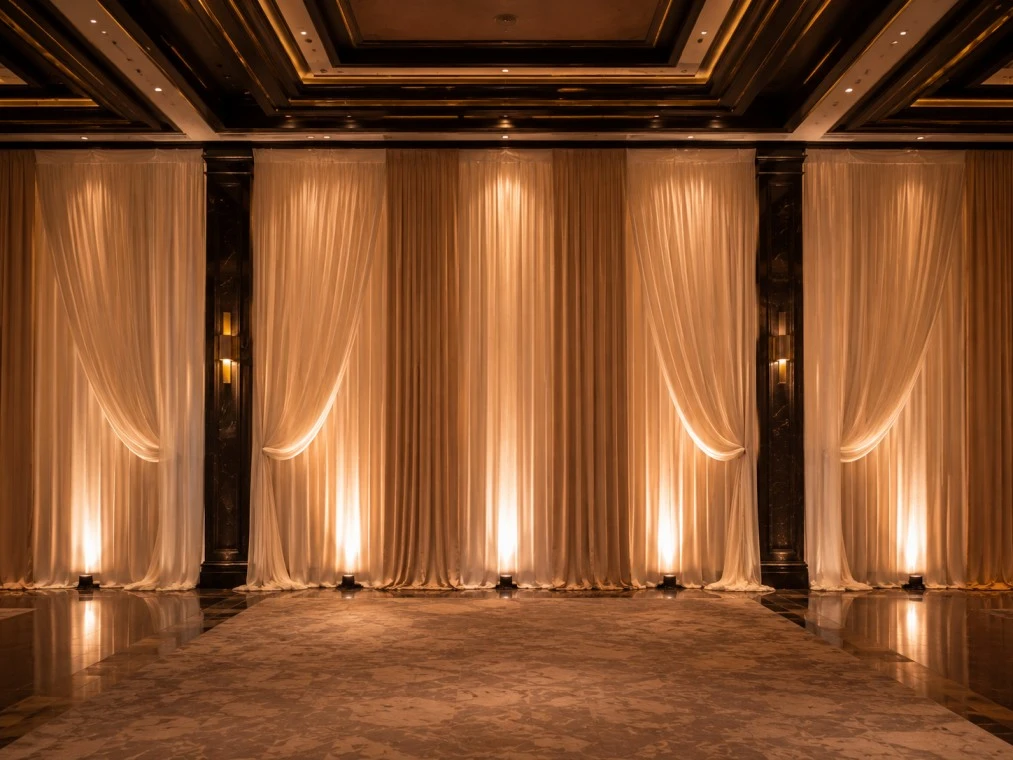
Wall & Perimeter Coverage
Cover distracting venue walls or selected perimeter areas so the room has a cleaner background and a more intentional visual finish.
Event Draping Services
Event draping can cover distracting venue surfaces, create focal backgrounds, divide temporary event spaces, conceal service areas, and give the room a cleaner, more intentional finished appearance.
Designed Around The Venue
Some venues need a softer background. Others have walls, doors, service areas, or architectural details that pull attention away from the event. Large ballrooms can also need more visual structure so important areas do not feel lost inside the room.
The useful question is not simply how much fabric can be added. It is what the fabric needs to accomplish. That may mean creating a ceremony background, framing a stage, covering a perimeter wall, dividing a room, or concealing something guests should not see.
DMV Drape is Virginia based and serves event draping projects across Virginia, Washington DC, Maryland, North Carolina, and South Carolina.
Common Applications
Current event draping providers commonly organize the service around wall or perimeter coverage, backdrops, dividers, stage environments, ceremony areas, and concealment. The exact mix still depends on the venue and event layout.
Cover distracting venue walls or selected perimeter areas so the room has a cleaner background and a more intentional visual finish.
Create a defined fabric background for ceremonies, stages, sweetheart tables, presentations, photo areas, and other important focal points.
Separate sections of a larger venue, define temporary event zones, or create privacy without making permanent changes to the room.
Give speeches, presentations, performances, panels, and formal programs a cleaner visual background from both the audience and camera perspective.
Use fabric to frame ceremony areas, receptions, sweetheart tables, ballroom walls, and other important moments throughout the wedding venue.
Hide service areas, backstage equipment, storage, or other temporary event elements that should stay outside the guest-facing view.
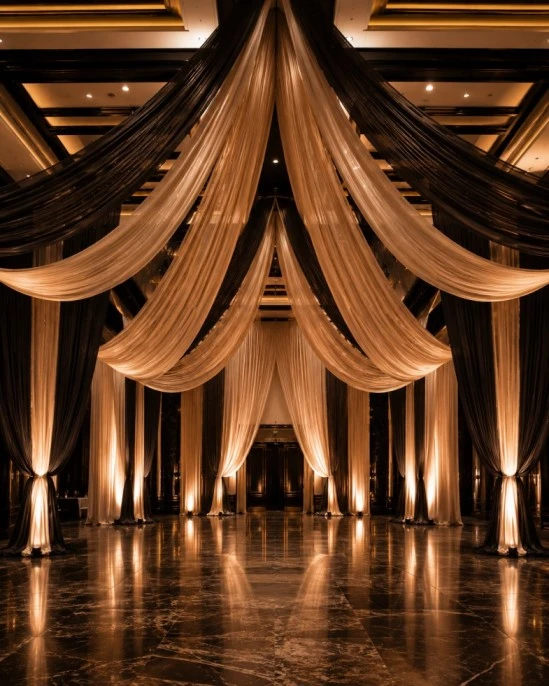
Start With The Room
A wall that looks small in a photograph may span a large part of a ballroom. A stage may need enough background coverage to feel balanced from the back of the room. A divider may need to create privacy without interrupting guest circulation.
Room dimensions, ceiling height, sightlines, entrances, existing architecture, guest layout, staging, screens, venue access, and setup timing can all influence the amount and placement of draping.
Photos and floor plans are helpful when available, but they are not required to begin the conversation. The venue name, event date, and the areas that need attention are enough to start.
Discuss Your VenueForm And Function
The strongest installation usually has a clear reason for being there. Fabric can improve what guests see while also helping organize how a temporary event space works.
Cover background surfaces that compete with the event design, stage, ceremony, or guest-facing focal areas.
Use draping to direct attention toward a ceremony, stage, presentation, sweetheart table, head table, or photo area.
Temporary fabric coverage and divisions can help a large ballroom or event space feel more defined and intentional.
Cleaner fabric backgrounds can improve what appears behind guests, speakers, performers, ceremonies, and important event moments.
Planning The Draping
The event goal, room conditions, venue rules, and installation schedule all matter when deciding what should be draped and how the temporary setup should fit into the event.
Start with the event date, venue or city, event type, and the parts of the room that need attention.
Identify what should be covered, framed, separated, concealed, softened, or turned into a focal point.
Room dimensions, photographs, sightlines, floor plans, venue access, and the event layout help determine how much coverage makes sense.
Delivery, setup, event timing, venue requirements, and breakdown are considered around the temporary installation.
Event Support
The finished fabric is only one part of the project. Delivery, installation timing, setup, venue access, and breakdown can all affect how the draping fits into the event schedule.
Delivery is available for DMV Drape event draping projects.
Setup and breakdown are available so the temporary installation can be handled as part of the event service.
DMV Drape accepts inquiries around the clock for event draping needs and project planning.
Service Coverage
DMV Drape provides event draping services across Virginia, Washington DC, Maryland, North Carolina, and South Carolina. Include the exact venue when requesting a quote so access, timing, travel, and project scope can be considered with the draping plan.
Explore Service AreasEvent Draping Questions
Understanding what draping can do makes it easier to decide which surfaces, focal areas, or temporary zones actually need coverage.
Event draping can cover walls, create backdrops, frame stages, define ceremony areas, divide rooms, conceal service spaces, control sightlines, and change how a venue looks from the guest perspective.
Yes. Wall and perimeter coverage are practical uses for event draping. Fabric can reduce visual distractions and create a cleaner background for the rest of the event environment.
Yes. Draping can create a focused background for ceremonies, stages, presentations, sweetheart tables, photo areas, head tables, and other important parts of an event.
Event draping describes the broader use of fabric to change the appearance or function of a space. Pipe and drape is a portable support system commonly used to hold fabric for temporary walls, dividers, booths, concealment, and backdrops.
Yes. Draping can help create temporary divisions inside larger spaces, define event zones, create privacy, or conceal areas that guests do not need to see.
Draping can be useful for weddings, corporate events, galas, private celebrations, presentations, trade shows, ceremonies, conferences, and other events where the venue needs visual or functional changes.
Useful details include the event date, venue or city, event type, areas that need coverage, approximate measurements when available, room photographs, floor plans, preferred visual direction, and reference images.
Yes. Delivery, setup, and breakdown are available for DMV Drape event draping projects.
DMV Drape is Virginia based and serves event draping projects throughout Virginia, Washington DC, Maryland, North Carolina, and South Carolina.