Wall Draping
Cover distracting venue walls and unfinished surfaces so the event environment feels cleaner, softer, and more intentional from the guest perspective.
Event Room Transformations
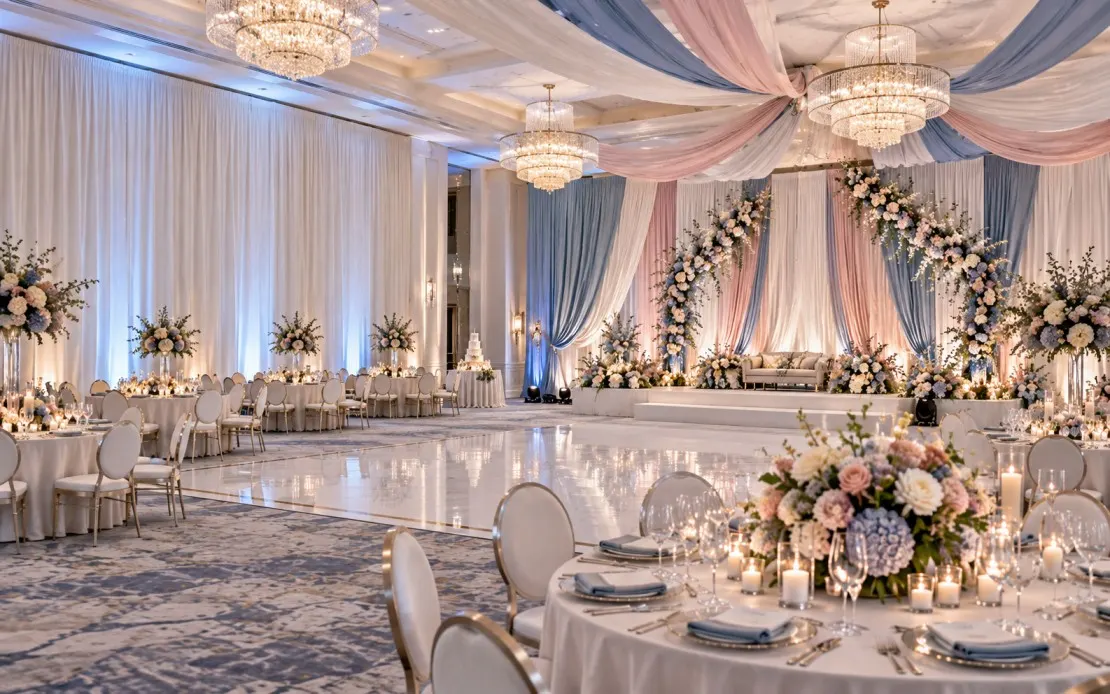
DMV Drape transforms event spaces with draping, backdrops, temporary walls, and visual space planning for weddings, corporate events, galas, and private celebrations.
Start With The Existing Room
Every venue already has its own structure, finishes, lighting conditions, and visual limitations. Some of those features help the event. Others pull attention in the wrong direction or make the room feel unfinished.
A successful room transformation is not about hiding everything. It is about deciding what should stay visible, what should be softened, and where fabric can create the strongest visual improvement.
That may mean one elegant ceremony backdrop, broader ballroom wall coverage, a cleaner stage environment, or temporary divisions that help the venue feel more organized and intentional.
Transformation Elements
The goal is not to make every venue look the same. The goal is to improve what guests actually see and create a better environment for the event.
Cover distracting venue walls and unfinished surfaces so the event environment feels cleaner, softer, and more intentional from the guest perspective.
Create visual emphasis behind sweetheart tables, ceremony locations, stages, head tables, presentations, and photo moments that deserve attention.
Use temporary fabric walls to break up large spaces, separate functions, create privacy, or conceal less important sections of the venue.
Build a stronger background for speakers, performers, ceremonies, and productions so the visible frame looks more polished in person and on camera.
Treat multiple walls and edges of the room when one backdrop is not enough and the venue needs a more complete visual reset.
Improve what guests see at entrances, lounges, dining areas, registration points, photo spaces, dance floors, and other high-visibility zones.
Ballroom Transformations
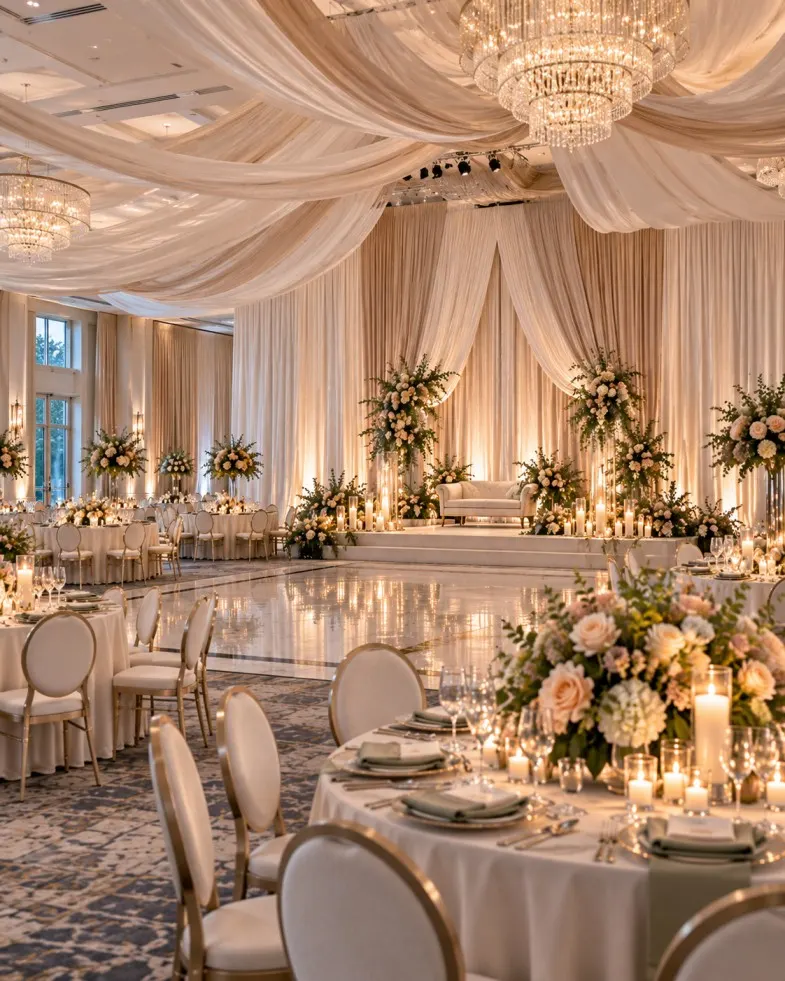
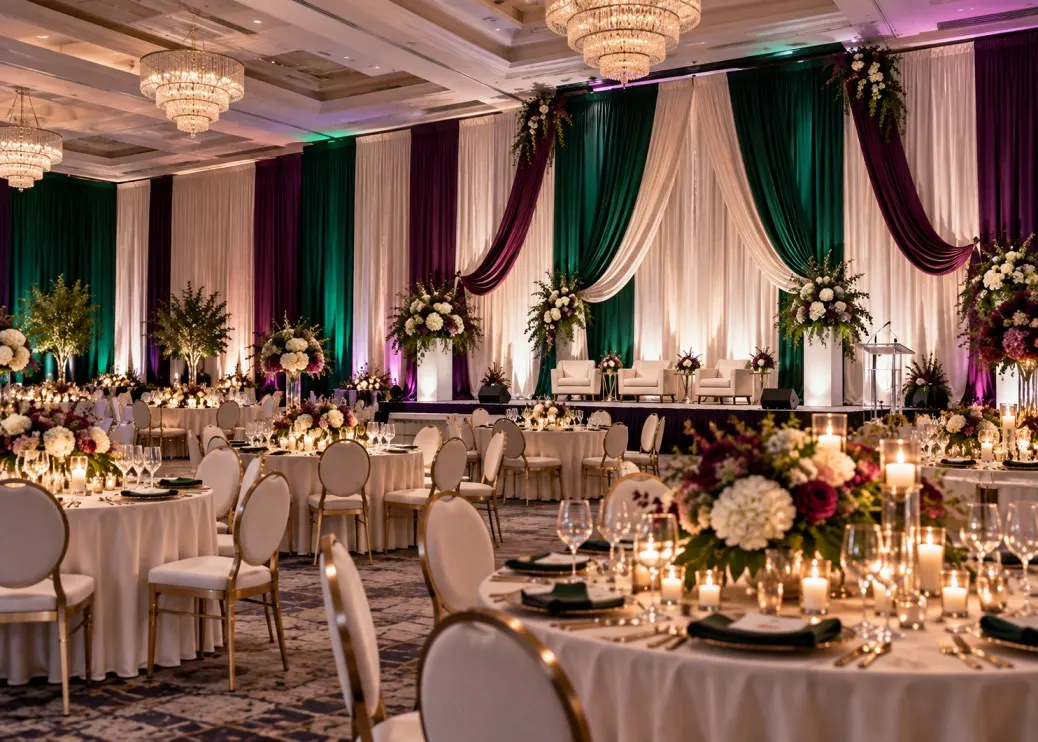
Ballrooms are built for flexibility, but that flexibility often means the room looks generic until it is shaped around a specific event. Selective wall draping, backdrops, and perimeter treatments can create a more refined setting without fighting the architecture.
The strongest ballroom transformation balances aesthetics with function. Guest entry points, dining layouts, service paths, dance floors, stage areas, and production needs all affect how the fabric treatment should be planned.
When those details are considered early, the room feels complete rather than decorated as an afterthought.
Planning The Transformation
Before deciding how much coverage a room needs, define which surfaces, angles, and focal points matter most to the guest experience.
Some venues already have strong architecture, chandeliers, or premium finishes. A smart transformation keeps the features that help the event.
Distracting walls, service doors, backstage areas, oversized empty sections, or dated finishes are usually the first areas worth improving.
Entrances, stages, ceremonies, sweetheart tables, dance floors, and photo angles help define where the transformation needs the most attention.
Room treatments should support guest flow, catering, production, staging, exits, vendor access, and the actual use of the space.
Think Beyond Decoration
Room transformation is not only decorative. It can control sightlines, improve photography backgrounds, separate event zones, and hide temporary production or service areas that should stay outside the guest view.
A blank wall can become a polished backdrop. An oversized ballroom can feel more intimate. A busy stage environment can become cleaner and more focused.
The best transformations improve both the visual quality of the room and the way the event functions inside it.
Different Events
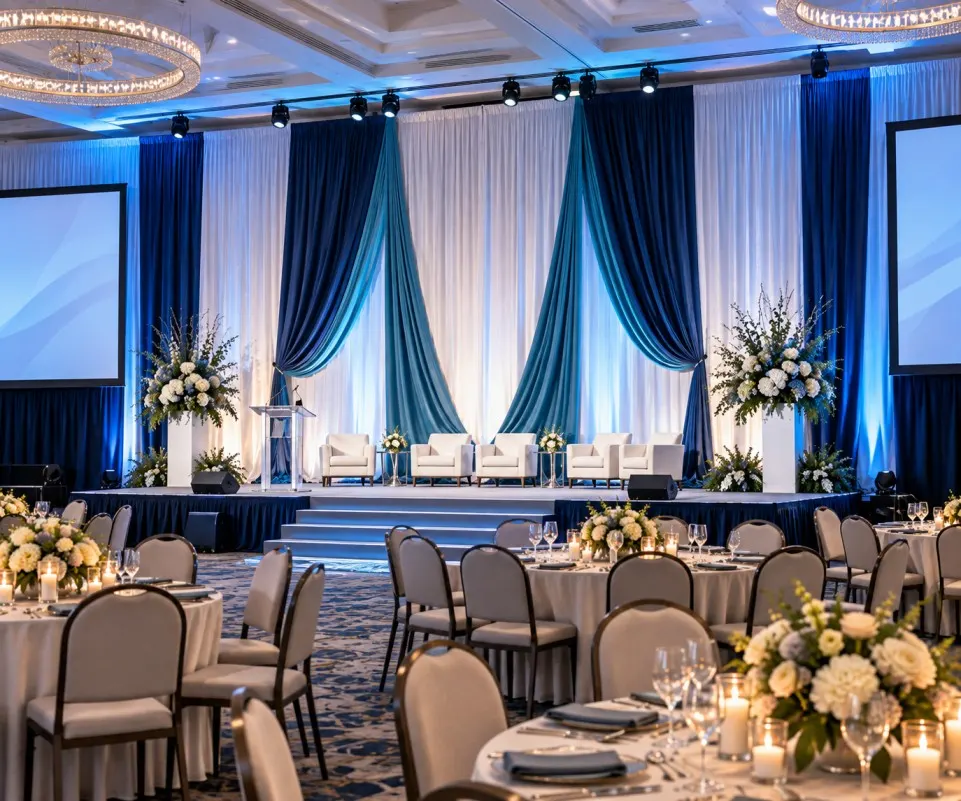
A wedding, conference, gala, and private celebration can all use the same venue in very different ways, which is why the transformation strategy should follow the event rather than a fixed template.
Transform ceremony and reception spaces into a softer, more elegant setting with clear focal areas and better visual continuity across the room.
Shape presentation areas, networking zones, registration spaces, and branded moments inside ballrooms, conference venues, and event halls.
Give formal events a more finished atmosphere with stronger stage backgrounds, cleaner dining views, and a cohesive room-wide visual experience.
Upgrade birthday parties, anniversaries, cultural events, and milestone celebrations without making permanent changes to the venue itself.
Corporate & Gala Environments
Corporate events often place more visual pressure on the stage because that background appears in presentations, photography, video, livestreams, and guest content.
Larger rooms may also need temporary divisions for registration, backstage activity, networking zones, or production support. The transformation should make those functions possible without exposing every working part of the event.
For galas and formal events, broader visual treatment can unify the room around tables, entertainment, lighting, and guest-facing focal points.
Choosing The Scope
Best when one main area needs the most attention, such as a stage, ceremony, sweetheart table, head table, or signature photo backdrop.
Explore BackdropsIdeal when certain walls, corners, service areas, or perimeter sections need improvement while the rest of the venue can remain visible.
Explore Event DrapingUsed when the venue needs broader wall treatments, temporary divisions, and coordinated focal areas to create a noticeably different environment.
Explore Pipe & DrapeDesign Around Sightlines
The entrance view, dining view, stage view, and photography view can all be different. Planning around those realities helps the transformation feel complete where it matters most.
Consider what guests first see when they enter the venue and how the opening impression sets the tone for the event.
The ceremony location, stage, or sweetheart area usually needs the cleanest and most controlled visual background.
Wide shots often reveal more of the venue than guests notice, so background control matters for documentation and social content.
As people circulate through the room, new angles open up. Those side views should be part of the transformation plan.
Service Coverage
DMV Drape is based in Virginia and serves room transformation projects across Virginia, Washington DC, Maryland, North Carolina, and South Carolina. Share your venue name when requesting a quote so access, installation timing, and layout planning can be considered together.
Explore Service AreasStart With The Room
You do not need every technical detail to begin. The event date, venue, room photos, and the areas you want to improve are enough to start the conversation.
The date helps determine availability and installation planning.
Share the venue name or city so the space can be understood in context.
Explain which walls, focal areas, room divisions, or background problems need attention.
Photos, floor plans, measurements, and inspiration images help refine the transformation.
Room Transformation Questions
The right transformation depends on the room, the event, and the parts of the space that need the most visual improvement.
An event room transformation changes how a venue looks and feels for a specific event using temporary elements such as draping, backdrops, room divisions, focal treatments, and visual space planning.
No. Some rooms only need one or two strong treatments, while others benefit from broader coverage. The right scope depends on the venue, the event, and what guests will actually see.
Yes. Ballrooms, banquet halls, hotel event rooms, and other venues can be visually upgraded by covering selected walls, creating focal backdrops, controlling sightlines, and dividing oversized spaces.
Yes. Temporary fabric divisions and selective wall treatments can visually reduce scale, define guest zones, and make a large room feel more intentional without changing the permanent structure.
Event draping is one of the main tools used within a room transformation. A room transformation is broader because it considers the full event experience, including multiple focal areas, room function, and visual flow.
Helpful details include the event date, venue name or city, room photographs, approximate dimensions if available, the areas you want to improve, and any inspiration images or design references.
DMV Drape is based in Virginia and serves projects across Virginia, Washington DC, Maryland, North Carolina, and South Carolina.