
Room Dividers
Create temporary separation inside ballrooms, conference spaces, exhibit halls, and event venues without changing the building itself.
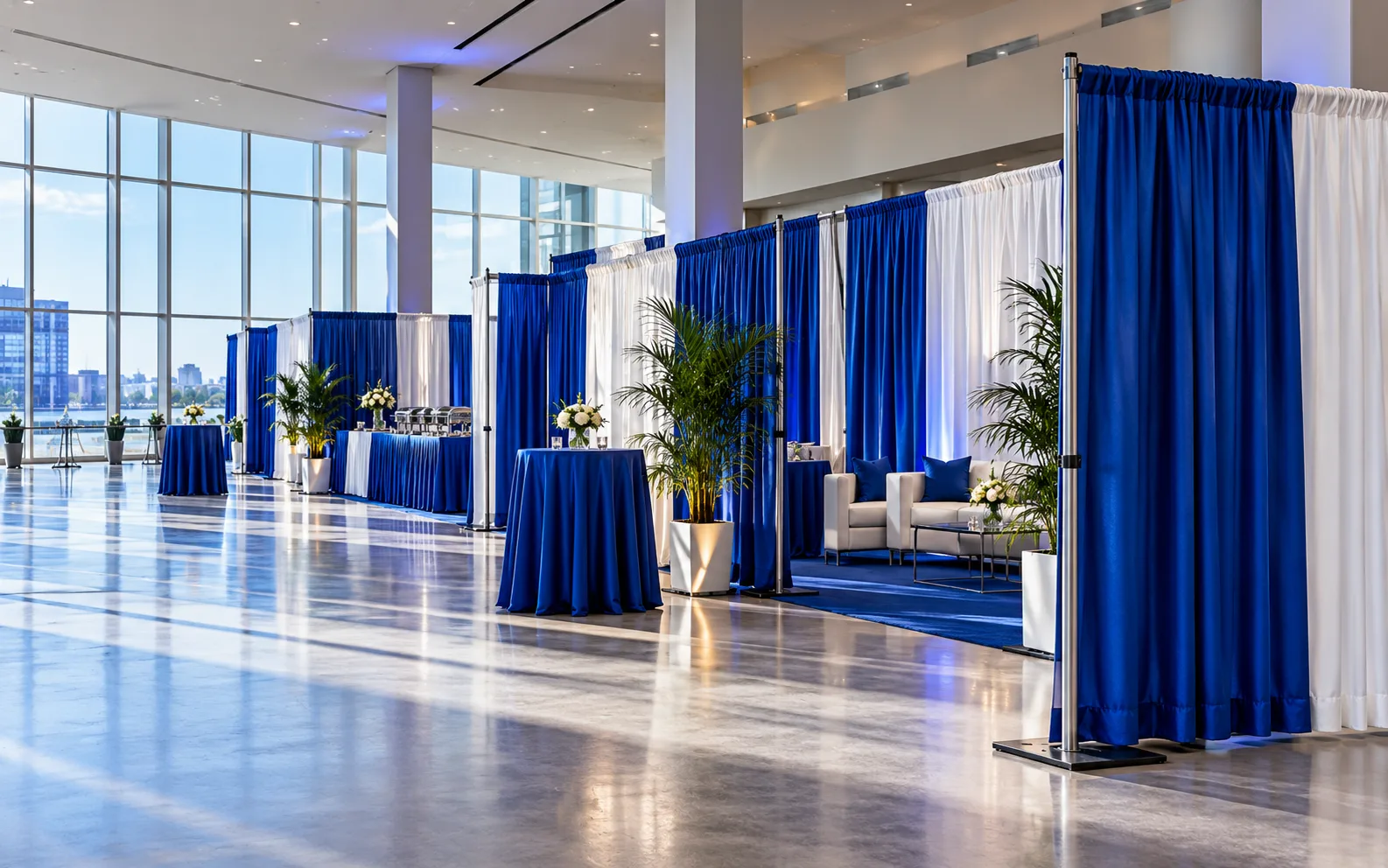
Pipe & Drape Rentals
Create room dividers, stage backdrops, trade show booths, wedding focal areas, temporary walls, and concealed event zones with pipe and drape planned around the venue.
Flexible Event Structure
Pipe and drape uses freestanding hardware and fabric to create temporary coverage without depending on the venue walls for the basic structure.
That flexibility makes it useful for both visual and practical needs. A short run can create a stage or ceremony background. A longer installation can divide a ballroom, conceal production areas, or define several exhibitor spaces across a trade show floor.
The best setup starts with the purpose of the installation, then considers height, width, guest traffic, access, sightlines, event timing, and the conditions inside the venue.
Common Applications
Pipe and drape can be decorative, functional, or both. The right use depends on what the room needs to accomplish and what guests should or should not see.
Create temporary separation inside ballrooms, conference spaces, exhibit halls, and event venues without changing the building itself.
Build a cleaner background behind speakers, panels, presentations, performances, and formal programs so the stage reads clearly in person and on camera.
Define booth boundaries, exhibitor areas, registration zones, backstage sections, and temporary production spaces across a trade show floor.
Frame ceremonies, sweetheart tables, reception focal areas, photo moments, and other high-visibility parts of the wedding venue.
Keep catering zones, storage, production equipment, backstage activity, and other working areas outside the guest-facing view.
Use freestanding fabric-supported structures to reshape how guests experience a large room or create a cleaner visual perimeter.
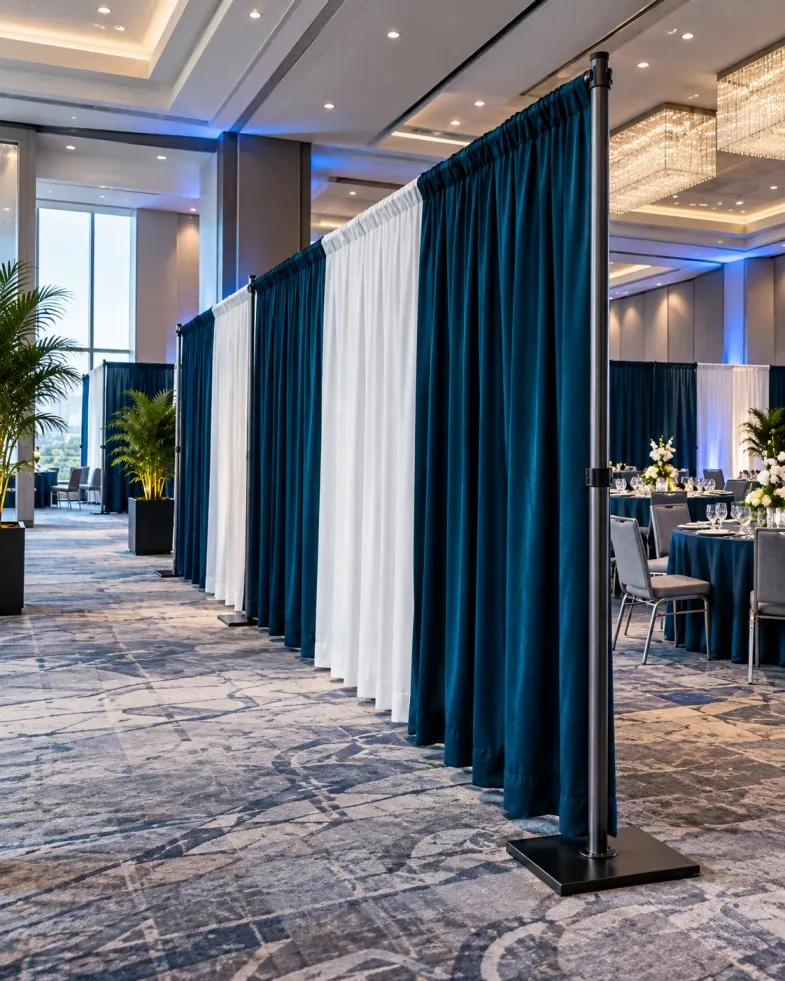
Temporary Room Division
Large ballrooms, conference spaces, and event halls are not always the right size or shape for the event using them. Pipe and drape can create temporary boundaries that help the room feel more organized and intentional.
A divider can separate registration from the main event, create a backstage area, conceal catering or production activity, or reduce the visible size of an oversized room.
The placement should still support guest movement, entrances, exits, service paths, staging, screens, and the overall floor plan.
Planning The Setup
The strongest layouts start with what the installation needs to do and how the venue will be used during the event.
The useful height depends on what needs to be covered and how the installation should look from important guest and camera sightlines.
The total span helps determine how much temporary separation, booth structure, or background coverage the event actually needs.
A stage background, trade show divider, wedding backdrop, and concealed service zone each solve a different event problem.
Flooring, access, guest movement, entrances, exits, setup windows, and venue requirements all influence the final configuration.
Trade Shows & Exhibits
Trade shows are one of the most practical uses for pipe and drape. A repeatable temporary system can define booth lines, registration areas, backstage zones, storage, and production spaces across a larger exhibit environment.
The layout should work with the floor plan instead of against it. Booth dimensions, aisles, entrances, signage, stages, guest circulation, and move-in timing can all influence where each drape run begins and ends.
The same approach can also support conferences and corporate events by creating breakout areas or cleaner stage environments inside a larger room.
Explore Trade Show Draping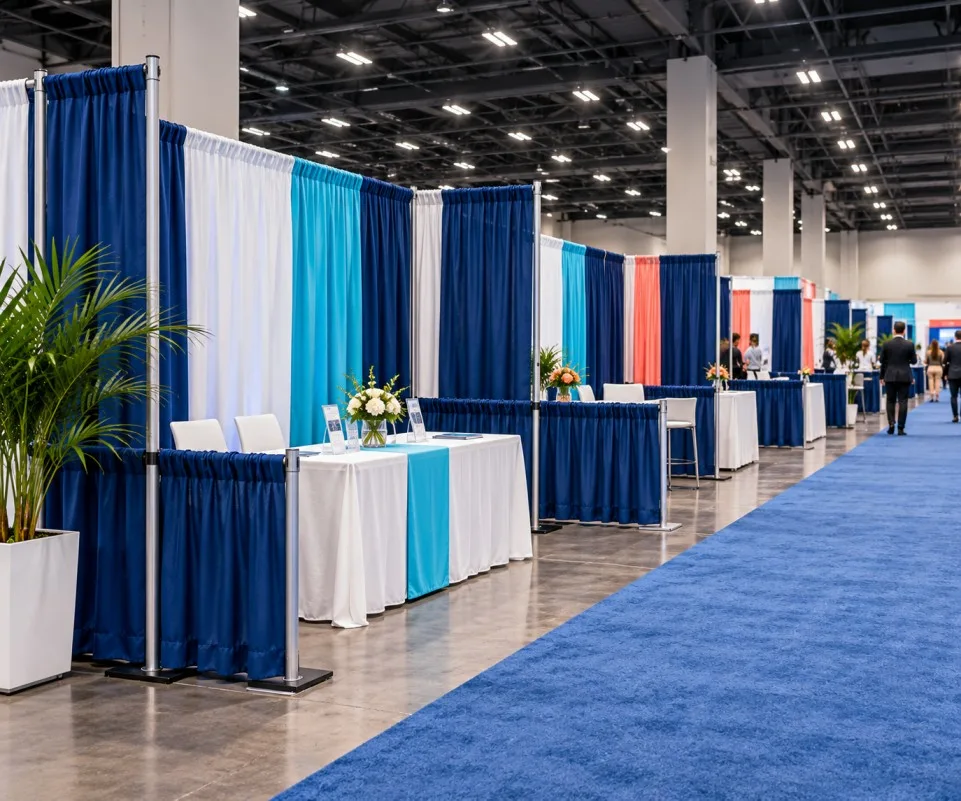
Event Applications
The same temporary framework can serve very different purposes depending on the audience, venue, and event format.
Define booths, aisle edges, registration areas, temporary boundaries, and controlled production zones inside busy exhibit environments.
Create stage backgrounds, breakout areas, temporary rooms, registration zones, and cleaner guest-facing sightlines.
Build ceremony backgrounds, reception focal points, temporary room divisions, and concealed service areas within the venue.
Create polished backdrops and temporary environments that help the room feel more intentional for guests, photography, and formal programs.
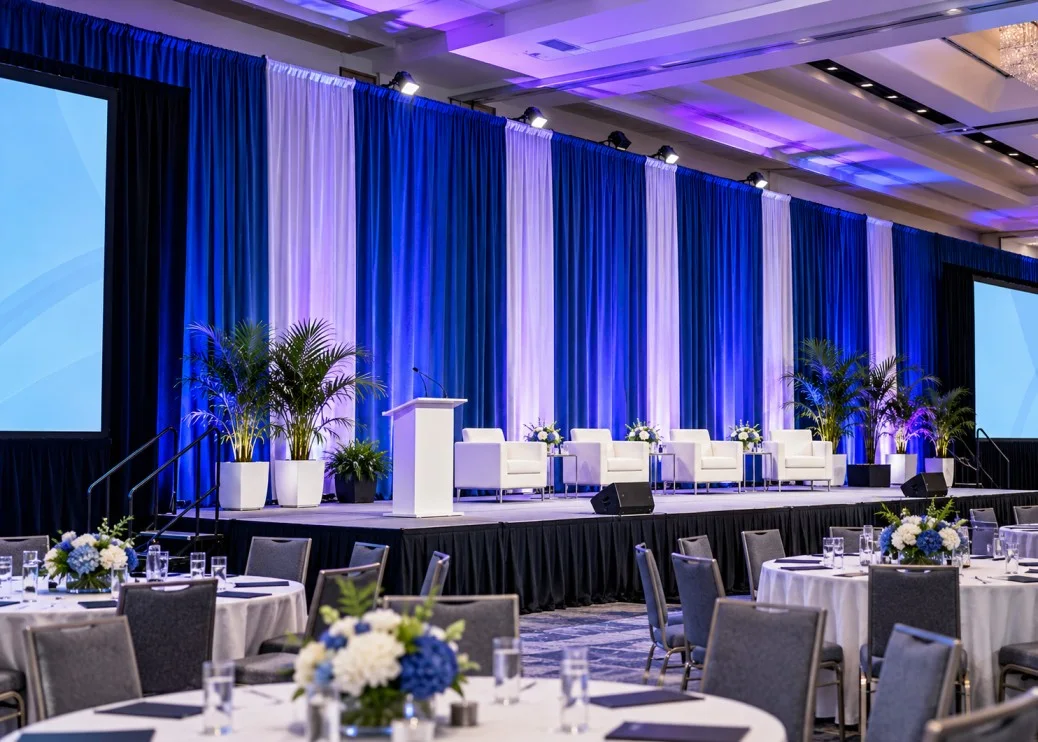
Stage & Backdrop Applications
Stages often become the most photographed and recorded part of an event. Existing walls, doors, service areas, or busy architectural details can compete visually with speakers and presentations.
A pipe and drape background can create a more controlled visual frame behind a stage, ceremony, photo location, head table, or other focal point.
The width and height should make sense from the audience and camera view, not only from directly in front of the setup.
Understanding The Difference
A freestanding framework that supports fabric and is especially useful for temporary walls, booth boundaries, room dividers, concealment, and supported backdrops.
Current ServiceThe broader use of fabric to change the appearance or function of a venue. Pipe and drape can be one part of a larger draping plan.
Explore Event DrapingEvent Support
Delivery, installation timing, venue access, breakdown, and the rest of the event schedule all affect how the final setup comes together.
Delivery is available for DMV Drape pipe and drape projects.
Setup and breakdown are available so the temporary system can be handled as part of the event service.
DMV Drape accepts inquiries around the clock for event planning and pipe and drape needs.
Service Coverage
DMV Drape serves pipe and drape projects across Virginia, Washington DC, Maryland, North Carolina, and South Carolina. The exact venue matters because access, room dimensions, setup schedules, and project scope can vary significantly.
Explore Service AreasPipe & Drape Questions
A few details about the room and the purpose of the installation make the first conversation much more useful.
Pipe and drape is a temporary freestanding support system that uses uprights, horizontal supports, weighted bases, and fabric panels to create backdrops, room divisions, booth boundaries, temporary walls, and concealed event areas.
Common uses include stage backgrounds, trade show booths, wedding backdrops, room dividers, registration areas, backstage masking, service area concealment, and temporary event walls.
Yes. A freestanding pipe and drape system can divide a larger space into more defined areas. The final layout should still account for guest flow, access points, exits, venue rules, and the event floor plan.
Yes. Pipe and drape is commonly used to define booth lines, exhibitor areas, registration zones, backstage sections, and other temporary boundaries at trade shows, conferences, and exhibitions.
Yes. Pipe and drape can support fabric behind ceremony areas, sweetheart tables, stages, photo locations, and other wedding focal points that need a defined background.
Pipe and drape refers to the freestanding support system used to hold fabric. Event draping is the broader use of fabric to change the appearance or function of a venue and can include pipe and drape as one part of the overall design.
Helpful details include the event date, venue or city, what the setup needs to accomplish, approximate width and height when known, room photographs, floor plans, and any important access or setup timing information.
Yes. Delivery, setup, and breakdown are available for DMV Drape pipe and drape projects.
DMV Drape is Virginia based and serves projects across Virginia, Washington DC, Maryland, North Carolina, and South Carolina.